

AUTHOR: ALI
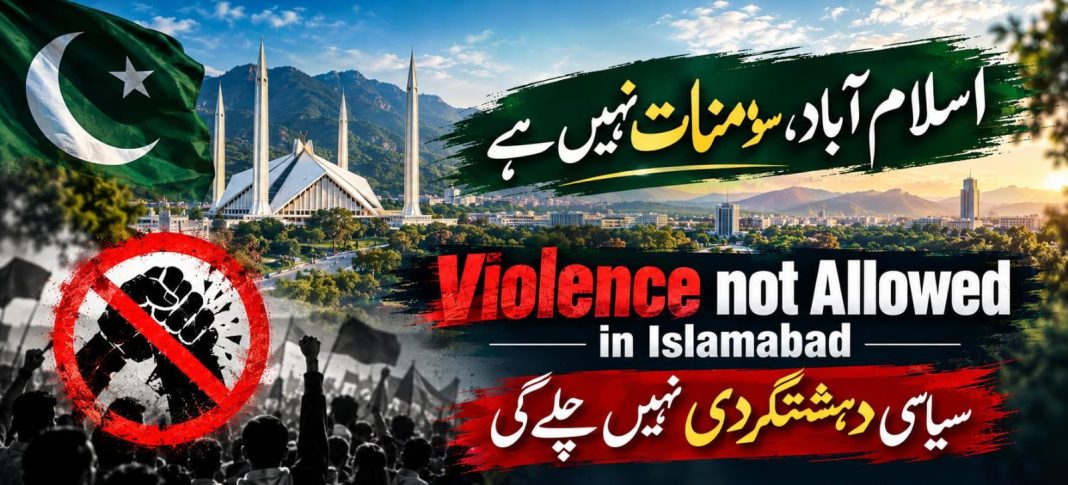
Political tensions are rising in Pakistan ahead of Pakistan Tehreek-e-Insaf’s (PTI) planned march towards Islamabad on September 27, with the government warning that the demonstration could potentially lead to violence and disruption.
The government has cited remarks attributed to PTI Khyber Pakhtunkhwa President Junaid Akbar at a youth convention in Mardan, interpreting them as an indication that the planned mobilisation could adopt a confrontational character. According to the government’s account, Junaid Akbar used strong language while describing the proposed march and its violent objectives.
An incident reported in Malakand is also an indication towards violence in which two Levies personnel were allegedly injured in firing involving private guards of PTI MPA Shakeel Khan. Meanwhile PTI MPA Shakeel Khan himself was present at the occasion.
The federal government has further expressed concern over social-media videos those are depicting armed individuals preparing to participate in the mobilisation. Information Minister Attaullah Tarrar, State Minister Talal Chuhdary and other Officials argue that such developments raise questions about whether the proposed march could remain entirely peaceful.
A particularly serious concern raised by the authorities is the possibility that militant elements could attempt to exploit a large political gathering to enter Islamabad or target sensitive locations. Such claims represent a significant national-security concern and if it happens the way anticipated , it could put national security at higher risk
From an international-relations and domestic-stability perspective, prolonged political confrontation can carry broader consequences when it coincides with regional insecurity and economic uncertainty. Large-scale demonstrations, strikes and sit-ins are legitimate forms of political expression when conducted peacefully and within the law; however, violence, attacks on public institutions and damage to property can undermine public order and deepen political polarisation.
The government has therefore urged citizens to avoid supporting activities that could result in violence or damage to public property and has called for restraint.
Ultimately, the political significance of the September 27 mobilisation will depend not only on its size but also on whether political actors can maintain discipline, prevent violence and keep political competition within constitutional and democratic boundaries. For Pakistan, preserving public order while protecting the right to peaceful political expression remains a critical institutional challenge.